Retired HR Manager Reveals a 60-Second Rule That Helps Smart Nigerians Stop Freezing Before They Act

You open WhatsApp.
You type the message.
You read it again.
And then… the thinking starts.
"What if this sounds too forward? What if they think I'm desperate? What if I'm bothering them at the wrong time?"So you delete everything.
You close the app. And you tell yourself the same thing you've been telling yourself for weeks now.
"I'll send it later. Let me think about it more first."Later never comes.
And the person you were supposed to reach? They moved on. The opportunity? Gone. That collaboration, that job lead, that connection — evaporated. Not because you weren't qualified. Not because you didn't have something valuable to offer. But because you hesitated.
And the worst part is — you knew you were going to hesitate. You saw it happening in slow motion and you still couldn't stop it.
Maybe it's not just WhatsApp messages. Maybe it's the Zoom call where everyone is waiting for someone to speak up — and you have something to say, you've had it ready in your head for three minutes — but you stay quiet.
"They'll probably say it better. Let me just wait and see."Maybe it's the client follow-up you've been postponing for nine days because you don't want to seem "too pushy." Maybe it's the favour you need to ask your manager, but you've been rehearsing the words in the shower every morning and still haven't said them.
Or maybe you've started applying for that remote role — updated your CV, drafted your cover note — and then on the morning you're supposed to submit, something in you just... stalls.
"Maybe I'm not ready yet. Maybe I need to improve one more thing first."You are not alone in this. I need you to know that.
But I also need you to know something else — something that took me too long to find out.
The problem is not your confidence. It's not your writing. It's not even the other person's opinion.
It's a very specific, very fixable pattern in the way your brain processes action.
And once you understand it — and once you have the right tool to short-circuit it — everything changes. Fast.
Drop everything you are doing now and listen to every word I'm about to say.
Because I'm about to share with you a simple 60-second rule that changed everything for me — and has quietly helped dozens of others like you finally stop hesitating and start moving.
This method isn't new.
In fact, the principle behind it has existed for longer than most of us have been alive. The most effective people — the ones who seem to move through life without second-guessing themselves constantly — they've always understood something that the rest of us were never taught.
Not in school. Not in church. Not even by our parents, who themselves were stuck in the same loop.
It was passed down quietly, corner to corner — shared at networking events, inside mentorship conversations, between people who were willing to be honest with each other about what was really holding them back.
And I only found out about it by accident.
Hi.
My name is Tunde A.
I'm 29. I live and work in Lagos — remotely, from home. And before I say anything else, I want to be upfront with you: I am NOT a certified coach. I am not a psychologist. I have no letters after my name.
I'm just a regular person who spent years being smart enough to know what I needed to do… but kept freezing right at the moment I was supposed to do it. And who eventually — almost by chance — found a way out of that pattern.
That's it. That's my only qualification.
But if you'll give me a few minutes, I'd like to tell you my story. Because I genuinely believe you'll see yourself in it.

Let me take you back to 2023.
I had just transitioned to full remote work after a year of trying to make a hybrid freelance arrangement work. I had the skills. I had a decent portfolio. On paper, I was in a good place.
But there was this thing happening — quietly, consistently — that I kept trying to ignore.
I would get a lead. A potential client would slide into my DMs on LinkedIn. Or a colleague would send me a referral. And instead of responding quickly and professionally… I would stare at the message for an hour. Draft a reply. Rewrite it. Delete it. Ask myself if I sounded too eager, or not eager enough. Wonder if my rate was too high. Wonder if my portfolio was strong enough. Wonder if they would even respect me.
Then I'd tell myself to come back to it after I'd thought it through properly.
"Let me just be sure before I reply. I don't want to make the wrong impression."The problem? By the time I came back to it — sometimes a day later, sometimes two — the energy had shifted. The opportunity had cooled. Sometimes the person had already moved on. And I'd sit there feeling that specific kind of shame that comes from knowing you sabotaged yourself.
It wasn't just messages. It was everything.
I didn't speak up in virtual meetings even when I had a relevant point. I didn't pitch myself for projects I genuinely wanted. I kept quiet in conversations where one sentence from me could have shifted things in my favour.
I was constantly arriving late to my own life.
And the emotional cost? Heavy.
I started feeling anxious every time a notification came in. Not excited — anxious. Like every message was a test I wasn't ready for. The joy of freelancing — the freedom, the flexibility — started feeling less like freedom and more like an open field where I had nowhere to hide from my own hesitation.
My confidence took a knock I didn't fully acknowledge at the time.
I started seeing people around me — friends, colleagues, people I used to be ahead of — move forward. Land clients. Close deals. Speak up. Get noticed. And I'd watch it happen from the sidelines and tell myself I just needed more time. More preparation. One more course. One more revision of my portfolio.
"When I'm fully ready, I'll move. Not yet."The breaking point came on a Tuesday evening in July.
I'd spent three days drafting a message to a potential collaborator I'd met at an online event. Someone who had specifically said "reach out." I had the message ready — it was good, it was warm, it was professional. And I just… didn't send it.
That night, I saw on LinkedIn that they had announced a collaboration. With someone else. Someone who had just met them and reached out immediately.
I sat in my chair for a long time after that.
Not crying. Not angry. Just quiet. And somewhere in that quiet, a voice — not dramatic, just honest — said:
"Tunde. You are doing this to yourself."I called my older cousin Biodun later that night. She's the kind of person who doesn't sugarcoat things. I told her what had been happening. The hesitation. The missed moments. The pattern.
She listened. And when I finished, she said something I wrote down immediately:
That stayed with me. But I still didn't know how.
So I tried everything people usually try when they're stuck in this pattern.
I watched motivational videos. Hours of them. YouTube channels about confidence, mindset, action. They felt good while I was watching. Then I'd close the tab and be right back where I started. The feeling of inspiration is not the same as the ability to act. I learned that the hard way.
I read books. Three of them in two months. Self-help classics about overcoming fear, building habits, rewiring your mindset. Good books. Genuinely. But they were written for a different context, a different pace, a different kind of person. And more importantly — by the time I finished reading, I still didn't have a single practical tool I could use in the moment when the hesitation hit.
I asked friends for advice. They meant well. But their advice was always the same: "Just do it, guy. Stop overthinking." As if I didn't know that. As if knowing the solution and being able to execute it in real-time are the same thing.
I tried rewriting messages until they were "perfect" before sending. This made things worse. Because the more I rewrote, the more options I created, and the more options I had, the harder it became to commit to any of them.
I tried waiting until I "felt ready." That was perhaps the most destructive one. Because the feeling of readiness — I now understand — is something your brain manufactures after you act, not before. Waiting for it is like waiting for sunrise by standing outside at midnight and wondering why it's still dark.
I saved posts and tips. I had a folder of screenshots — "confidence tips," "communication hacks," "how to be more decisive." Dozens of them. I looked at them occasionally. Nothing changed.
Nothing worked.
Because everything I was trying was designed to change how I felt. And what I actually needed was something that would change what I did — in the moment — regardless of how I felt.
The conversation that changed everything happened on a Saturday afternoon in Ikeja.
A small networking event. Maybe thirty people in a conference room near Computer Village. I almost didn't go — I'd been invited three times and kept finding reasons to stay home. This time I forced myself out the door before I could think about it too much.
I ended up standing near the drinks table with a man named Mr. Adewale.
He looked to be in his early sixties. Quietly dressed. Unhurried in the way he spoke, like someone who had learned long ago that there was no benefit in rushing words. I found out later that he had spent over thirty years in human resources — hiring, managing, and developing professionals across some of Nigeria's most established companies. Thousands of people had passed through his hands. He had seen patterns in human behaviour that most of us never get the chance to observe at that scale.
We were talking casually — the usual things. Work, the economy, remote work, the state of opportunities for young Nigerians. And at some point, I mentioned — almost offhandedly — that I sometimes struggled with hesitation when it came to reaching out to people. That I would draft messages and never send them.
He stopped.
Not dramatically. He just paused mid-sip of his malt drink and looked at me in a way that made me feel like I had said something more significant than I realised.
"How long has that been going on?" he asked.
I told him. A couple of years, at least. Probably longer if I was honest.
He nodded slowly. Then he said:
I looked at him.
"Sixty seconds?"
"Sixty seconds," he repeated. "From the moment you decide you want to send that message, you have sixty seconds before your brain shifts from support mode to resistance mode. Act before the sixty seconds are up. Every time. No exceptions."
He went on to explain why it worked — the way overthinking is actually a secondary brain process that kicks in after your initial impulse to act. That initial impulse is clean and clear. The hesitation comes from the layer of thinking that follows. And that secondary layer takes roughly sixty seconds to fully activate.
"The videos won't help you," he said. "The books won't help you. Those things teach you to think differently. But the moment of hesitation is not a thinking problem — it's a timing problem. You need a rule. A mechanical rule. Not a mindset. A rule."
I was standing there, honestly, feeling a little resistant. It sounded too simple. I had been suffering from this for years and the answer was just… a timer?
"This can't be it. Surely this is too basic to actually work."But Mr. Adewale had spent thirty years watching people. And everything he said matched my experience in a way that no YouTube video or book ever had. So I decided to at least try it.
The first two days were awkward.
I kept forgetting to apply the rule. I'd catch myself already deep in the overthinking spiral before I remembered. I'd think, okay, reset, sixty seconds from now — and then use those sixty seconds to overthink some more.
On day three, something small shifted.
I had a message to send to a potential client. The usual anxiety started rising. And this time — almost without thinking — I just started typing. Not slowly and deliberately. Quickly. Before the voice in my head had time to object. I sent the message before I could review it more than once.
My chest was tight for about ten seconds after I hit send.
And then... nothing happened. No disaster. No rejection. No embarrassment. The world continued to exist. And about twenty minutes later, the person replied warmly.
That was the first moment I understood — really understood, in my body, not just intellectually — what Mr. Adewale had been telling me. The fear of sending is always worse than what actually happens after you send.
By day seven, something had genuinely changed.
I wasn't acting perfectly. But I was acting faster. Messages were going out. Replies were coming in. Conversations were starting that would have died before they began a week earlier. And with each action I took before the sixty seconds were up, the next one got slightly easier.
It wasn't magic. It was momentum. And momentum, I was learning, is something that only activates when you're already moving.
About two weeks in, I got a message from a colleague I work with remotely. His name is Kunle.
I laughed for a good minute reading that message.
Wetin happen. Nothing happened. I just started giving myself less time to talk myself out of things.
That message from Kunle was important to me — not just because it was funny, but because it was external confirmation. I hadn't announced any changes. I hadn't told anyone I was working on something. The change was visible enough that someone noticed it without being told to look for it.
At the event where I met Mr. Adewale, two other people had been standing nearby during part of our conversation — Adaeze, a brand consultant from Enugu, and Seun, who runs a small logistics business in Yaba. Both of them had asked Mr. Adewale to explain the 60-second rule again before we left that evening.
I ran into Adaeze about three weeks later at another small gathering. She grabbed my arm the moment she saw me.
"Tunde, that thing he said works. I sent a pitch I'd been sitting on for two months. The client responded in four hours. Four hours!"
Seun messaged me separately. He told me he had applied it to phone calls — the calls he kept postponing, the suppliers he needed to chase, the conversations he kept saying he'd have "when the time was right." In ten days, he said, he had cleared a backlog of six important conversations he had been avoiding for months.
Neither of them were transformed people. Neither of them had suddenly become fearless extroverts. They were the same people — just finally moving at the speed their opportunities required.
And that, honestly, is all this was ever about.
After I shared what had happened to me — the change in how I was operating, the messages going out, the responses coming in — people started asking me to explain the method.
Friends. A few followers on social. People I'd met at events like the one in Ikeja. They'd hear some version of the story and say, "Wait — how exactly does the 60-second rule work? Walk me through it properly."
For a while, I tried to explain it individually. Over voice notes. In long WhatsApp texts. In calls that would go on for forty minutes because there was more to it than just "act fast." There's a specific way to apply it. There are patterns you need to recognise in yourself first. There are moments where it feels like it's not working — and what to do in those moments. There are templates that make the whole thing easier to execute.
I couldn't keep explaining it one person at a time.
So I did the only sensible thing.
I sat down and wrote everything out. Every detail Mr. Adewale shared with me. Everything I discovered by applying it. The patterns I identified. The techniques that made it stick. The templates I use so I never have to overthink what to say. The 21-day plan that turned this from a conscious effort into an actual default way of operating.
I put everything — the full rule, the exact steps, the hesitation patterns, the templates, the realistic outcome guide, the daily action plan — inside one simple, easy-to-read guide.
Introducing...
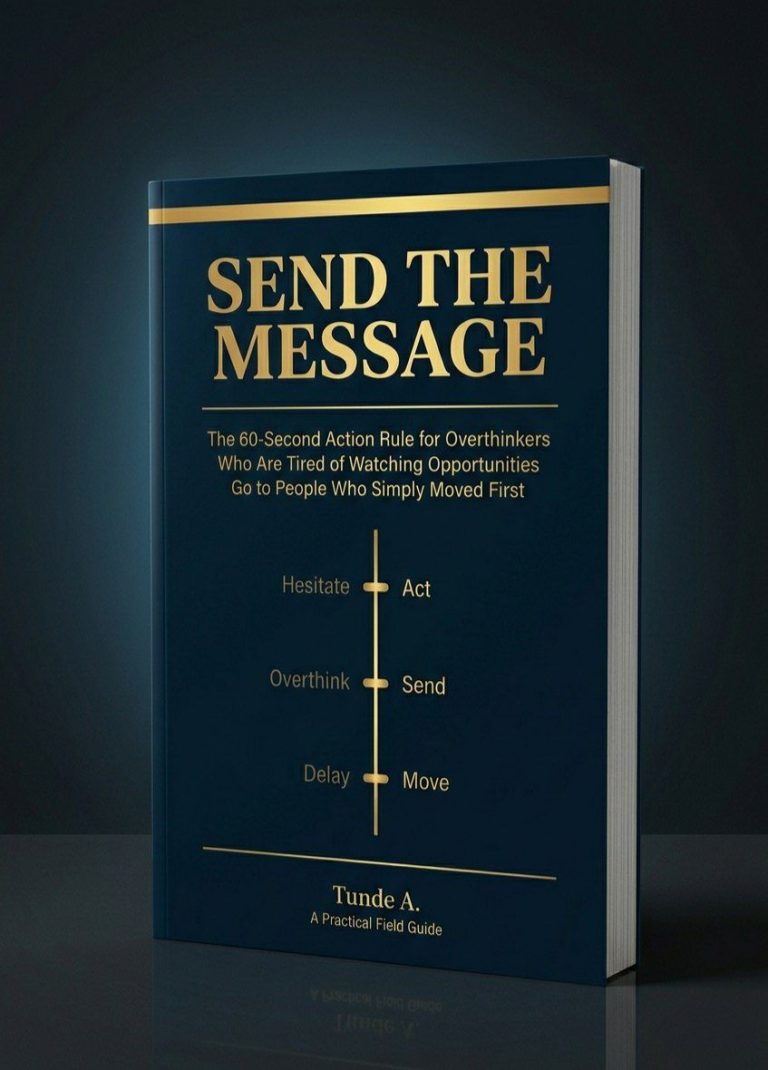
Send The Message
The 60-Second Action Guide for Smart Nigerians Who Know What to Do But Keep Hesitating Before They Do It
Inside this e-guide, you'll discover:
- The 60-Second Rule explained step-by-step — the exact mechanics of how to force yourself into action before your brain shifts into resistance mode and talks you out of everything you were about to do. (Pg. 3)
- The 3 hesitation patterns most Nigerians don't realise they have — and a quick self-diagnosis method so you can identify your specific pattern in under five minutes and know exactly which version of the rule applies to you. (Pg. 7)
- The "Name & Shrink" technique — a deceptively simple mental tool that makes any action — no matter how intimidating — feel small enough to start immediately. This alone is worth the entire guide. (Pg. 11)
- 5 ready-to-use message templates — for the exact situations where most people freeze: the follow-up, the cold reach-out, the pitch, the request, and the check-in. Copy, personalise, send. Done. (Pg. 16)
- The Realistic Outcome Guide — what actually, statistically, happens when you finally send the message or speak up. (Spoiler: it is almost never what the hesitation in your head tells you it will be.) (Pg. 21)
- The 21-Day Action Plan — a simple, day-by-day structure to rewire your default from "hesitate then maybe act" to "act then adjust." By Day 21, this is no longer something you have to consciously think about. (Pg. 27)
And the best part? You don't need to attend any seminar, or spend weeks reading dense theory, or completely overhaul your personality. It's the same simple method that worked for me — and has now quietly worked for over 40 people I've shared it with. People just like you. Remote workers. Freelancers. Young professionals navigating Lagos and every other city in Nigeria where opportunities move fast and hesitation costs real money.
Real People. Real Results. 🇳🇬
Honestly I was sceptical when I first saw this. Another confidence book, I thought. But this one is different because it gives you something to do — not just something to feel. I applied the 60-second rule to a pitch I had been sitting on for almost three weeks. Sent it in under a minute. Client replied within two hours and we are now in conversation. I can't explain how that felt after all that time of just… waiting.
Guy this thing is not a joke. I used to dey rewrite my messages five, six times before sending. Sometimes I go just delete everything and act like the opportunity never show. Since I start using the method for this guide, e don change. My response time don drop dramatically and I don already close two small contracts wey I for never even reach out about before. The templates alone are worth it — I no go lie.
The "Name & Shrink" technique in page 11 — I have shared it with my two sisters already. It sounds almost too simple when you first read it but when you actually use it in the moment, it works in a way that surprises you. I was someone who used to rehearse conversations in my head for days before having them. This week I had three conversations I had been postponing. Just like that.
What got me was the Realistic Outcome Guide. Because my fear was always about what would happen if things went badly — and this section shows you, clearly, what actually tends to happen. It reset my expectation in a very practical way. I'm not going to say all fear is gone. But the size of the fear has reduced enough that it no longer stops me. That is all I needed.
I do everything online — I sell, I consult, I network on LinkedIn. And I was losing so much because I would hesitate before posting, before reaching out, before following up. I read this guide in one sitting on a Sunday evening. By Monday morning I had already applied the 60-second rule three times. Small actions, but they happened. That is progress I hadn't made in months of trying other things.
Just So You Know... Putting This Guide in an Easy-To-Read Format Cost Me Over ₦126,450.
I'm not saying this to impress you. I'm saying it so you understand that what's inside this guide is not something I typed up in an afternoon. Real time and real money went into making sure it was genuinely useful.
- 💻 Professional writer and editor — to make sure the content was clear, structured, and actually readable. Not just a wall of text.
- 🔬 Research and validation — going back through my notes, conversations, and results from people who applied the method before it became a guide.
- 🎨 Design and layout — making it look like something worth reading, not just a rough Word document.
- 🧪 Testing across different reader profiles — making sure the method worked for people in different work situations, not just my specific context.
- 🌐 Website setup and digital delivery infrastructure — so that once you pay, you receive your guide instantly, no delays, no chasing anyone on WhatsApp.
Now — I'm not going to charge you ₦126,450. That would be unreasonable.
I won't even charge you half of that — ₦63,000.
Not even a quarter — ₦31,500.
In fact, you won't even pay the original fair price of ₦19,800.
Because right now — for the first 20 buyers only — I am making this available at a price that removes every possible excuse.
⚠️ This Discounted Price is ONLY For the First 20 Buyers — So Hurry!
🔒 Secure payment — Card, Bank Transfer, or USSD accepted. Instant delivery after payment.
⏳ WAIT! I Have a FREE Gift For You...
If you're among the first 20 buyers, you'll receive these two powerful bonuses alongside your guide. (TODAY ONLY)
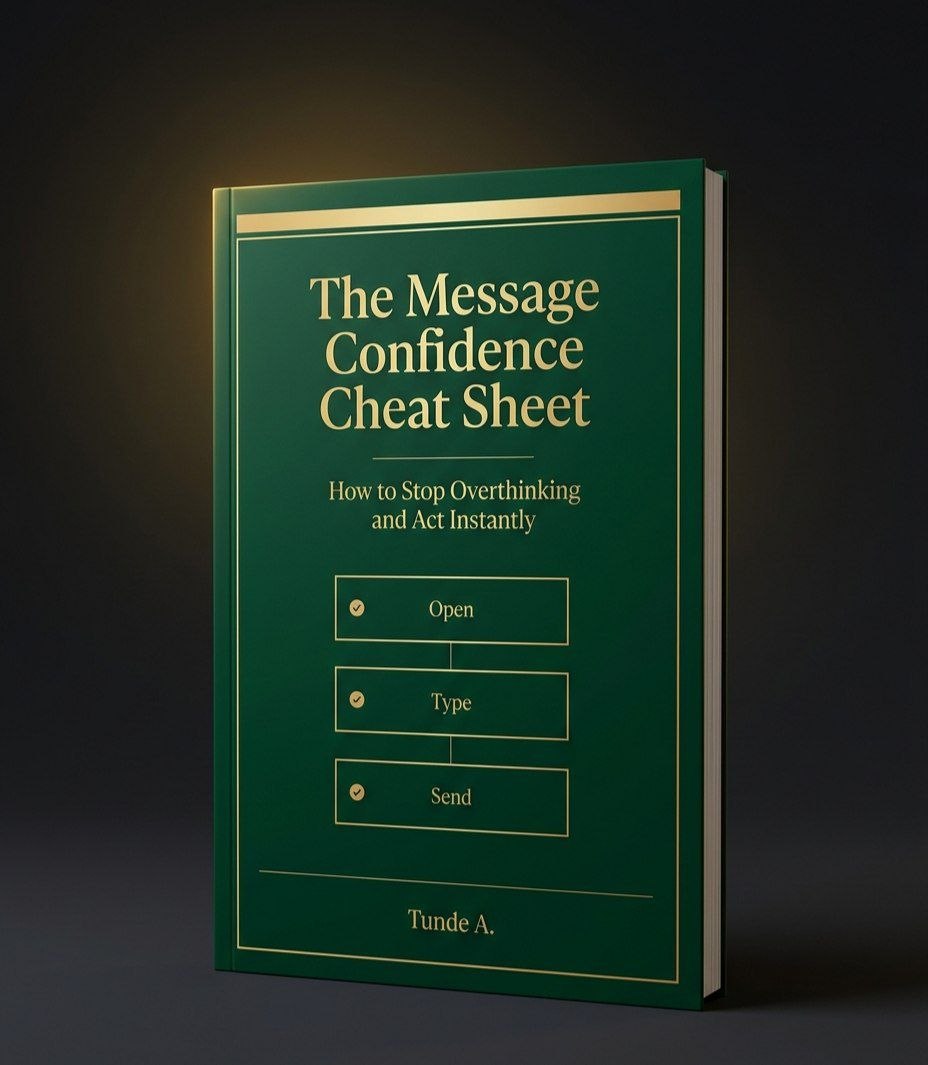
🎁 BONUS 1: The Message Confidence Cheat Sheet
A clean, one-page quick-reference guide you can check before sending any important message. It walks you through a 30-second mental checklist that replaces the anxious back-and-forth in your head with a structured, reliable process.
Value: ₦2,500 — Yours FREE today
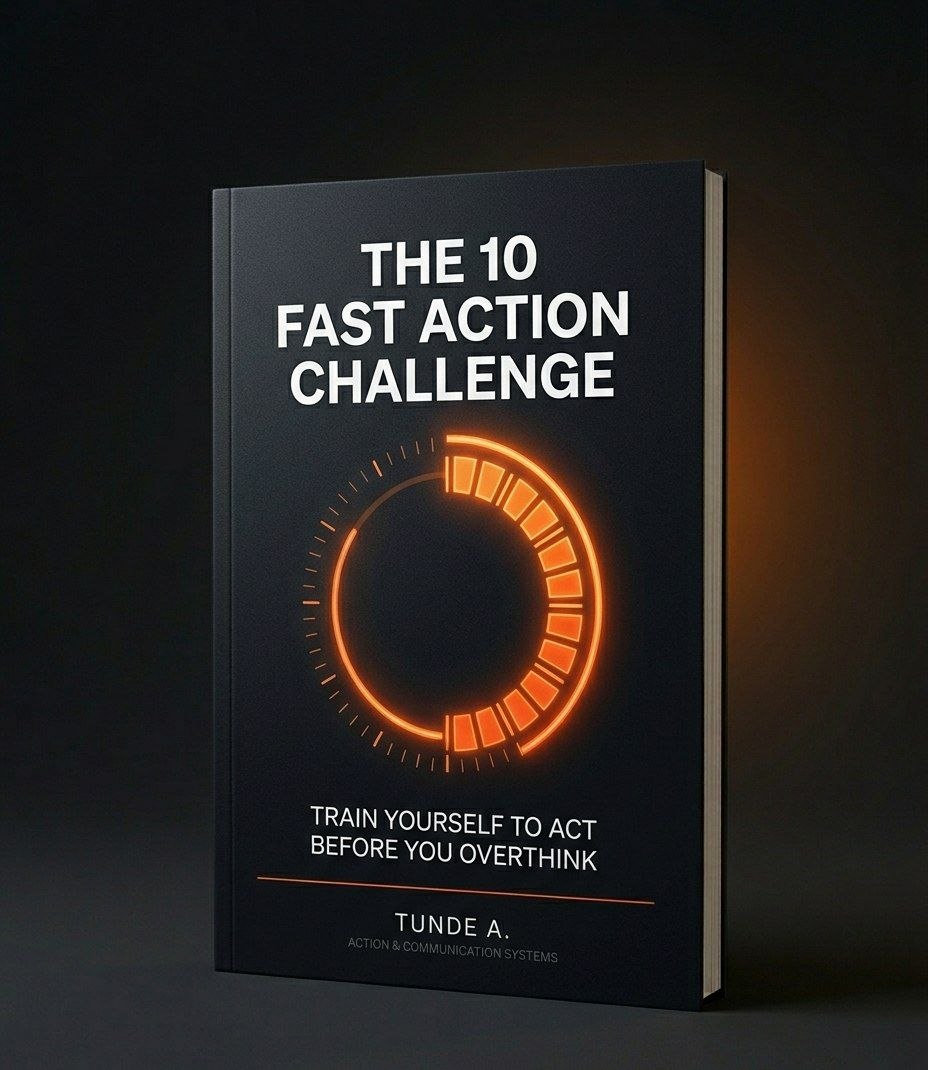
🎁 BONUS 2: The 10 Fast-Action Challenges
Ten simple, daily micro-challenges specifically designed to train your brain to close the gap between intention and action. Each challenge takes less than five minutes but builds the kind of muscle memory that makes the 60-second rule feel automatic — not effortful.
Value: ₦1,800 — Yours FREE today
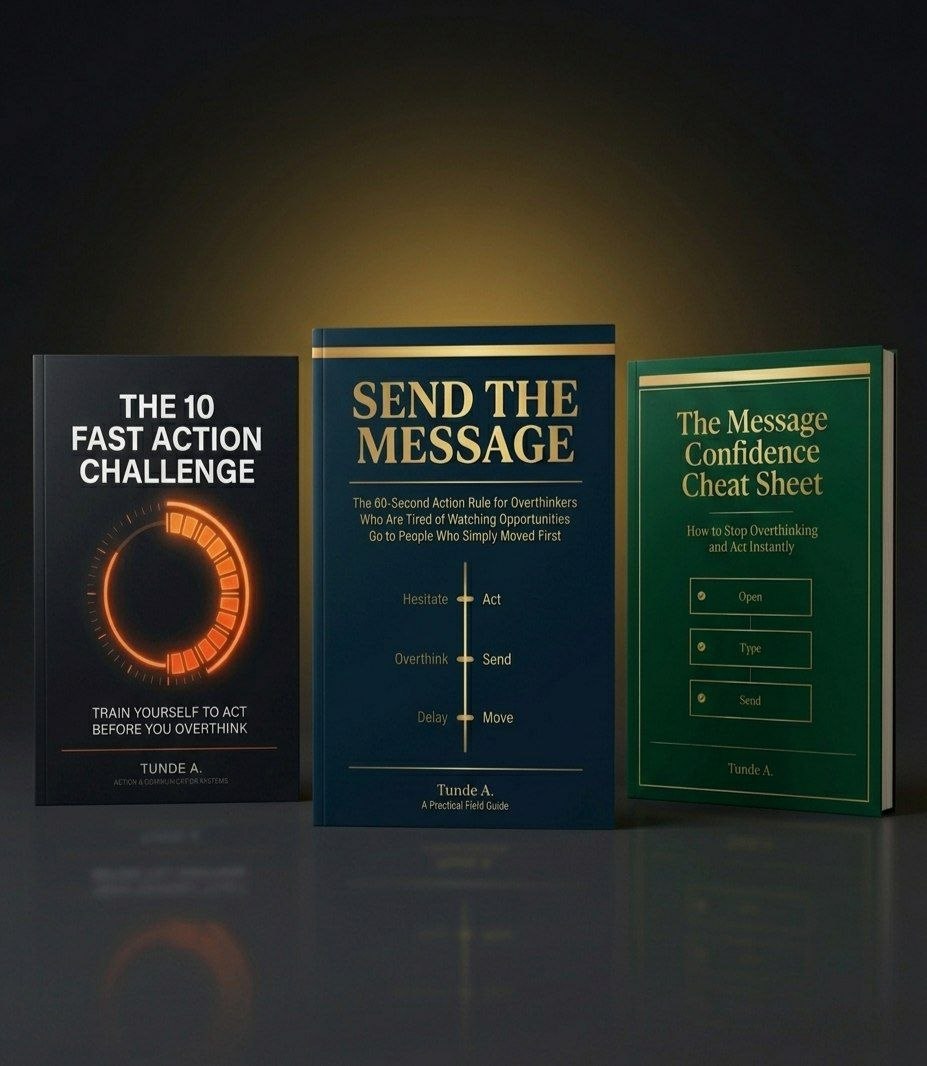
🔒 Secure checkout. Pay by card, bank transfer, or USSD. PDF delivered instantly.
See What's Happening Right Now 👇
14 people have already taken advantage of this discount...
Only 6 spots remaining at this price.
Bear in mind — you are not the only person viewing this page right now.
First 20 buyers only. After that, price returns to ₦19,800.
My Bold 30-Day Promise to You
Still feeling unsure? I totally understand. Which is why I'm making you a bold, risk-free promise:
Read the guide. Apply the 60-second rule. Use the templates and the 21-day plan for a full 30 days.
If you do that — genuinely apply it — and see absolutely no change in how quickly and confidently you act... send me a message and I will refund every naira you paid. No awkward questions. No hoops to jump through.
I can make this promise because I know what this method does when it's actually used. The risk is entirely on me. Your only job is to open the guide and follow the steps.
30 days. Full results or full refund. That is my promise to you.
30-day money-back guarantee. Instant delivery. No risk.
More Nigerians Sharing Their Results 🇳🇬
I applied the 60-second rule to something I had been avoiding for over a month — asking my manager for a project I wanted. I had the conversation. He said yes immediately. He even asked why I hadn't raised it sooner. I didn't know whether to laugh or cry. The fear in my head was so much bigger than the actual situation. This guide helped me see that.
As a freelancer, my income depends on reaching out. And I was losing money every single week because I'd find a potential client, see their contact, and then just... not message them. After reading this guide, I set a personal challenge using the 10 Fast-Action Challenges bonus. In one week I sent 11 outreach messages I would have deleted before. Three responded. One became a paying client. This thing works.
I read it in one evening. The section about the three hesitation patterns — I recognised myself immediately in pattern two. That alone was a revelation because I had never understood why I hesitated the way I did. Once you understand the pattern, the solution makes complete sense. I feel like someone finally explained my own brain to me in plain language.
Bros, I don share this with four people already. My brother wey dey struggle to apply for jobs, my colleague wey dey postpone following up with clients, my girlfriend wey no dey speak up for meetings. All of them benefited. The 21-day plan is very practical — it doesn't require willpower every single day, it just requires consistency. Big respect to the author for packaging this so well.
I have purchased a lot of digital products in the past. Most of them I open, read the first few pages, and forget. This one I read to the end on the same day. Not because it's long — it's actually very well paced — but because every page had something I could use right away. The message templates especially. I have already customised three of them for my own work. Excellent value.
💬 Add Your Story
You Have Two Options Right Now.
✅ Option 1: Take Action Today
Get Send The Message. Apply the 60-second rule. Start using the templates. Follow the 21-day plan. Begin recovering the opportunities, conversations, and connections that hesitation has been costing you — possibly for years. Within days, you start moving differently. Within weeks, people around you notice something has changed.
❌ Option 2: Close This Page and Continue as You Are
Keep drafting messages and deleting them. Keep watching opportunities pass because you were still "thinking about it." Keep replaying in your head the conversations you should have had. Keep waiting until you feel ready — knowing now, as you do, that the feeling of readiness comes only after you act. Maybe nothing will change. Maybe things will get more frustrating. Who knows.
Maybe it is not coincidence that you found this page today. Maybe someone who has been where you are right now put this in your path. The decision, either way, is yours.
⏰ The clock is ticking. Only 6 spots left at ₦9,800.
First 20 buyers only • ₦9,800 today (regular price ₦19,800) • 30-day money-back guarantee
🔒 Secure payment — Card, Bank Transfer, USSD. Instant PDF delivery.
💬 Share Your Experience